South Africa’s education system continues to face significant challenges, including deteriorating infrastructure, overcrowded classrooms, and persistently low educational outcomes. These issues deepen inequality and hinder the potentials of many children, particularly those from impoverished communities.
Currently, around 40% of young children in our country grow up in conditions of extreme poverty and neglect. They are at the highest risk of infant mortality, low birth weight, stunted growth, and developmental delays.
As they progress into formal schooling, they face additional barriers such as difficulties adapting to the classroom environment, higher grade repetition rates, and higher drop-out rates.
Studies done in 2024 and 2025 forecast that around 69% of 10-year-olds in South Africa would be unable to read for meaning by 2026. There is a large gap in foundational reading skills in Grades 3 to 4. This severely impacts later learning and school success. Unless interventions are scaled up or improved, the situation may worsen.
Strategy
Our strategic focus is ECD and supporting deserving students at tertiary institutions.
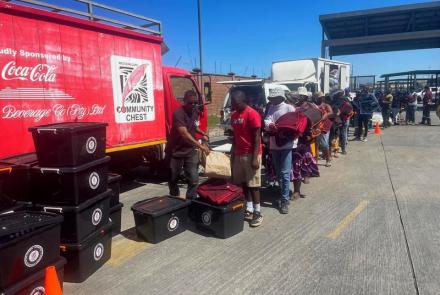
The Community Chest of the Western Cape has provided support to ECD associations across the Western Cape, specifically in Khayelitsha, Philippi and Worcester (informal settlements). These areas were targeted as poverty and unemployment is high, with a critical lack of basic infrastructure. More than 71% of households live below the national poverty line.
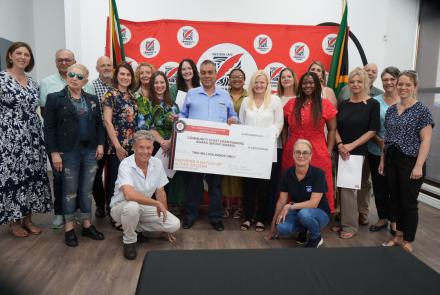
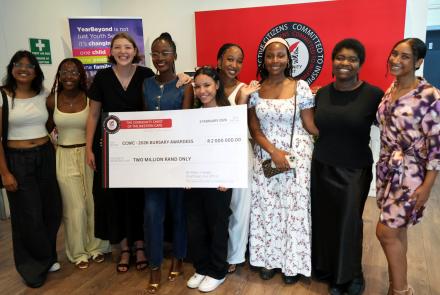
Our Bursary Awards, held on 5 February 2026, marked a significant milestone in the continued growth of our annual Bursary Programme. R2 million was allocated to support annual tuition fee bursaries for the 2026 academic year. This forms part of a three-year partnership that will see R6 million invested into education over the next three years.
Early Childhood Development
Early childhood development (ECD) is core to addressing the most basic needs of our youth in education.
While South Africa’s government has signed various treaties on the rights and welfare of children, its implementation has been inadequate.
Hunger and malnutrition in South Africa remain major concerns, as they cause irreversible intellectual damage.
The first thousand days of every child’s life – up to their second birthday – is the most critical window for early childhood development. It dictates up to 80% of lifelong brain development, physical growth and immune system health, making nurturing care essential for their future cognitive and emotional potentials.
Children who attend a good ECD programme do better at school, are healthier, are less likely to become involved in crime, and are more likely to get and stay employed. Girls who attend a good ECD programme are less likely to become pregnant as a teenager.
Our Constitution guarantees basic human rights for children. In the Western Cape, there are approximately 925,000 children under the age of six, of which only around 35% attend any form of ECD.
Early childhood development challenges include infrastructure, nutrition, ECD teacher qualifications, and funding.
The Community Chest of the Western Cape supports ECD centres across the Cape Flats, including in Philippi, Khayelitsha and Worcester.
We seek to be beacon of hope for every child under the age of six. If you want to help us help them, contact us on 021 487 1500 or info@comchest.org.za